
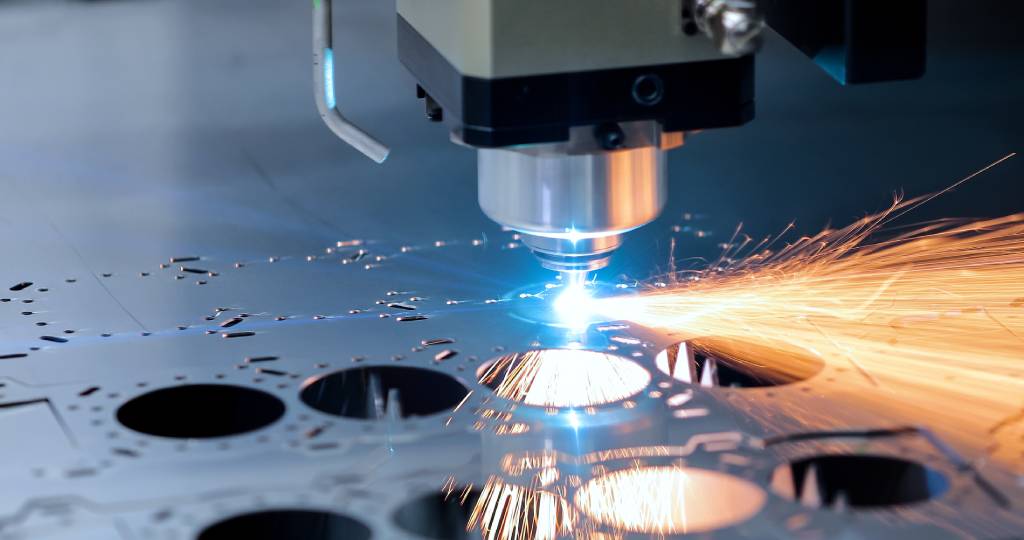
Modern manufacturing has entered a new era—one defined by extreme accuracy, rapid production, and the ability to create complex components with unmatched consistency. At the center of this transformation is precision CNC fabrication, a process that blends advanced engineering, computer-controlled machinery, and expert craftsmanship to deliver results that traditional machining simply cannot match.
Whether for aerospace components, automotive parts, medical devices, or custom industrial designs, CNC fabrication provides the precision, repeatability, and efficiency necessary to compete in today’s high-demand manufacturing landscape. This article explores how precision CNC fabrication works, why it is essential for modern industry, and the key benefits that make it a dominant manufacturing solution.
What Is Precision CNC Fabrication?
CNC (Computer Numerical Control) fabrication refers to the use of automated, computer-driven machinery to cut, shape, and form materials with extreme accuracy. Instead of relying on manual operation, CNC machines follow pre-programmed instructions to execute precise movements on raw materials such as:
-
Aluminum
-
Steel
-
Stainless steel
-
Brass
-
Titanium
-
Plastics
-
Composites
This automation ensures that every part matches the exact specifications of the digital blueprint, making CNC fabrication ideal for both one-off prototypes and large-scale production.
Why CNC Fabrication Powers Modern Manufacturing
Manufacturers today face increasing pressure to deliver products faster, with tighter tolerances, and at lower cost. Precision CNC fabrication meets these challenges by offering:
1. Unmatched Accuracy and Consistency
CNC machines operate on exact coordinates, allowing them to produce parts with tight tolerances—often within microns. This level of accuracy is crucial for industries like aerospace, automotive, and healthcare, where even a minor deviation can lead to system failure.
2. Superior Efficiency and Production Speed
Once a design is programmed, CNC fabrication can run continuously with minimal interruption. High-speed machining tools and automated processes reduce production time dramatically compared to manual methods.
3. Scalability for Any Project Size
Whether you’re producing custom prototypes or high-volume parts, CNC machines can be adjusted easily to meet demand without sacrificing quality.
4. Capability for Complex and Intricate Designs
Advanced CNC tools (such as 5-axis machines) can create shapes, contours, and geometries that manual machining cannot achieve. This opens the door for complex engineering and innovative product design.
5. Lower Risk of Human Error
Automation dramatically reduces mistakes, ensuring consistent quality across every production run.
Types of CNC Fabrication Used in Modern Manufacturing
Today’s manufacturing ecosystem relies on several CNC techniques to create precise and reliable parts:
1. CNC Milling
CNC milling machines rotate cutting tools against the material, removing layers to shape the final component. This method is ideal for complex geometries, pockets, slots, and multi-angled surfaces.
2. CNC Turning
CNC lathes spin the material while cutting tools shape it, making this method perfect for creating cylindrical or rounded objects such as shafts, pins, bushings, and threaded parts.
3. CNC Laser Cutting
Laser systems deliver extreme precision for cutting metals and non-metals with smooth, clean edges. They are commonly used for sheet metal fabrication and intricate patterns.
4. CNC Plasma Cutting
Utilizing high-temperature plasma, this method cuts through thicker metals at high speed. It is widely used in industrial fabrication and heavy-duty applications.
5. CNC Grinding
CNC grinders achieve ultra-fine finishes and tight tolerances, essential for precision components like bearings and hardened steel parts.
6. CNC Waterjet Cutting
Waterjet machines use highly pressurized water mixed with abrasives to cut materials without heat, ideal for delicate or heat-sensitive components.
Applications of Precision CNC Fabrication Across Industries
Precision CNC fabrication supports nearly every modern sector, including:
Aerospace
Aircraft require flawlessly engineered components. CNC machining delivers turbine blades, engine housings, brackets, and structural parts with accuracy and reliability.
Automotive
CNC fabrication is essential for engine blocks, transmission components, suspension parts, and custom performance upgrades.
Medical Devices
Surgical instruments, orthopedic implants, and laboratory equipment depend on ultra-precise machining to meet strict regulatory standards.
Electronics
CNC machining produces housings, connectors, heat sinks, and micro-components for sensitive electronic devices.
Industrial and Manufacturing Tools
From molds and dies to custom gauges and machine parts, CNC fabrication supports daily factory operations.
Defense and Military
Precision is critical for weapons systems, vehicle parts, communication devices, and aerospace defense technologies.
The Future of CNC Fabrication in Manufacturing
As industries evolve, CNC fabrication continues to advance through:
-
AI-driven machining optimization
-
Automated toolchange and robotic loading systems
-
Improved 5-axis capabilities
-
Hybrid CNC + additive manufacturing (3D printing)
-
Real-time monitoring and adaptive machining
These innovations ensure CNC fabrication remains at the forefront of global manufacturing efficiency and quality.
Conclusion
Precision CNC fabrication is more than a manufacturing method—it’s a foundation for modern production, innovation, and industrial growth. With unmatched accuracy, flexibility, speed, and reliability, CNC technology empowers businesses to meet demanding design standards and scale production with confidence.
Whether you’re building prototypes, complex designs, or full-scale manufacturing runs, CNC fabrication provides the precision and performance required for today’s competitive environment.