
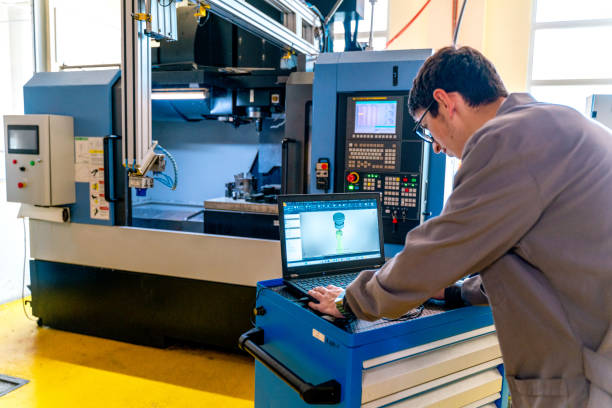
In the modern era of engineering and production, businesses across all sectors demand precision, speed, and reliability. As industries evolve and competition grows, manufacturers need advanced tools and technologies that deliver flawless, repeatable results. This is where CNC manufacturing excellence becomes a defining advantage. Whether producing small components, large industrial parts, custom prototypes, or high-volume commercial products, CNC technology ensures unmatched accuracy and consistency for every type of project.
This article explores how CNC manufacturing supports every industry, the benefits it provides, and why it has become the backbone of modern manufacturing worldwide.
What Is CNC Manufacturing?
CNC (Computer Numerical Control) manufacturing is a process where automated machines use programmed instructions to shape, cut, drill, mill, or turn raw materials into finished components. These instructions come from 3D CAD or CAM models, enabling machines to produce parts with exact dimensions and near-perfect precision.
CNC machines operate on materials such as:
-
Aluminum
-
Stainless steel
-
Carbon steel
-
Brass
-
Titanium
-
Plastics
-
Composites
From simple pieces to highly complex geometries, CNC systems ensure each part is manufactured accurately—every time.
Why CNC Manufacturing Excellence Matters
1. Precision That Meets Industry Standards
Industries like aerospace, medicine, and automotive require parts with extremely tight tolerances. CNC machines deliver accuracy down to microns, ensuring every component works as intended.
2. High-Speed Production
CNC machines automate much of the fabrication process, allowing companies to produce more parts in less time without sacrificing quality.
3. Consistency Across Every Run
Once a program is set, CNC machines can produce hundreds or thousands of identical parts, ensuring reliability and reducing errors.
4. Ability to Create Complex Shapes
With advanced multi-axis machining (3-, 4-, and 5-axis systems), CNC machines can form intricate contours, angles, and details that are impossible with manual methods.
5. Cost Savings for Manufacturers
CNC manufacturing minimizes waste, reduces labor needs, and ensures efficient use of raw materials—all of which lower production costs.
CNC Manufacturing Across Different Industries
1. Aerospace and Aviation
The aerospace sector relies on flawless precision due to strict safety and performance standards. CNC manufacturing is used for:
-
Engine parts
-
Turbine blades
-
Aircraft brackets
-
Structural components
-
Interior cabin elements
High-strength materials like titanium and advanced alloys are machined with accuracy to ensure durability under extreme conditions.
2. Automotive and Transportation
CNC machining supports both mass production and high-performance customization. Common automotive applications include:
-
Engine blocks
-
Transmission parts
-
Custom suspension pieces
-
Brake components
-
Precision gears
CNC machining allows vehicle manufacturers to enhance efficiency, safety, and performance across every model.
3. Medical and Healthcare
Medical devices must meet strict standards for hygiene, accuracy, and biocompatibility. CNC manufacturing plays a major role in producing:
-
Surgical instruments
-
Orthopedic implants
-
Machine housings
-
Diagnostic device parts
-
Custom prosthetics
Every component must be smooth, reliable, and produced with exact repeatability.
4. Electronics and Telecommunications
In electronics, small deviations in size can affect functionality and compatibility. CNC manufacturing provides:
-
Heat sinks
-
Enclosures
-
Mounting hardware
-
Connectors
-
Sensor housings
These components support everything from consumer electronics to data centers worldwide.
5. Construction and Architecture
Architects and builders rely on CNC manufacturing for custom metalwork and durable structural components such as:
-
Customized brackets
-
Metal panels
-
Support beams
-
Railings and fixtures
-
Architectural decorations
These parts need both strength and visual appeal.
6. Industrial Machinery and Equipment
Manufacturing plants depend on CNC-made parts for machinery maintenance, expansion, and production lines. Common components include:
-
Conveyor system parts
-
Custom tooling and dies
-
Fixtures and jigs
-
Machine bases
-
Gear housings
CNC machining keeps factories running efficiently.
7. Energy, Oil & Gas
CNC manufacturing ensures safety and performance in energy sectors. Common applications include:
-
Valve components
-
Pumps and compressors
-
Drilling equipment
-
Turbine parts
-
Structural housings
These parts must withstand pressure, corrosion, and extreme environments.
Core CNC Processes That Drive Industry Success
CNC Milling
Creates detailed geometries with high precision.
CNC Turning
Produces round or cylindrical parts with smooth finishes.
CNC Drilling
Ensures accurate hole placement for assemblies and mechanical parts.
CNC Laser Cutting
Creates sharp, clean cuts for sheet metal and thin materials.
CNC Waterjet & Plasma Cutting
Ideal for thick or heat-sensitive materials.
CNC Grinding
Achieves exceptional smoothness and high-precision finishes.
These processes empower industries with the flexibility and quality they need.
Benefits of CNC Manufacturing for Every Industry
1. Faster Time-to-Market
CNC machines accelerate prototyping and production, helping companies launch products sooner.
2. Improved Product Quality
Automated systems reduce human error and enhance precision across every component.
3. Efficient Material Usage
CNC machining minimizes waste, helping manufacturers reduce costs and support sustainability goals.
4. Scalability
Whether you need one prototype or 10,000 units, CNC systems can adapt quickly to any production volume.
5. Customization
Engineers can design and manufacture highly specialized components to meet unique project demands.
How CNC Manufacturing Ensures Excellence
CNC excellence comes from combining:
-
Advanced engineering software
-
Skilled machinists and technicians
-
High-performance machining centers
-
Rigorous quality inspection
-
Continuous process improvement
This combination ensures each part meets exact specifications with reliable repeatability.
The Future of CNC Manufacturing
CNC manufacturing continues to evolve with technologies such as:
-
AI-driven optimization
-
Automation and robotics
-
Smart factories (Industry 4.0)
-
Hybrid additive–subtractive manufacturing
-
Real-time digital monitoring
-
Energy-efficient machining
These innovations push CNC manufacturing toward even greater precision, speed, and sustainability.
Conclusion
CNC manufacturing excellence is the foundation of modern industry. From aerospace to electronics, automotive to medical, CNC technology delivers the precision, efficiency, and quality needed to support every sector. With advanced automation, expert engineering, and multi-axis capabilities, CNC machining ensures that every component—regardless of size or complexity—is produced to the highest standards.